

We’ve all been there before.
You wake up. Lay in bed for a few minutes before getting up. Check your blood sugar. 115 (6.3 mmol/L) stares back at you.
You smile to yourself: life is good.
Forty minutes later, when you sit down to eat, your blood sugar meter or CGM tells you that you are now at 180 (10 mmol/L)! You have eaten NOTHING. All you’ve done is prepare for the day and prepare food. Now you face the grim potential of chasing your high blood sugars all day long.
What is going on??
Let me explain why your blood sugar sometimes can be high in the morning and what you can do about it
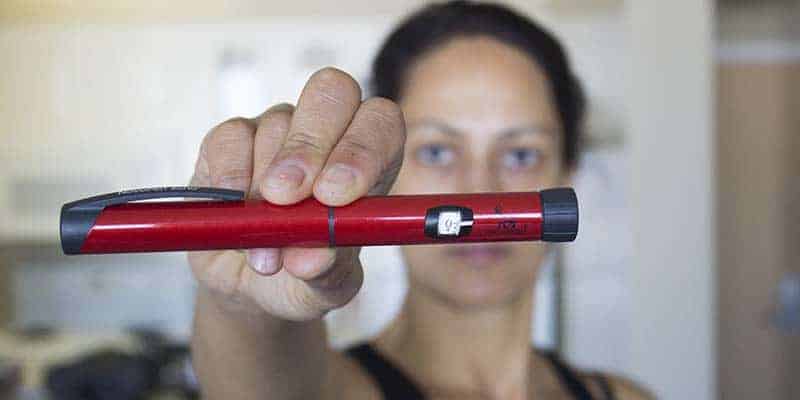
This isn’t Dawn Phenomenon
Many people would blame this rise in blood sugar on dawn phenomenon (DP), which has a similar endpoint, but a different mechanism.
Dawn phenomenon is the result of hormones released in the body in the early morning – predominantly growth hormone, cortisol, epinephrine, and glucagon – which in turn increase insulin resistance. The current basal insulin from the pump or long-acting injections is no longer enough, and blood sugars rise.
That hormonal surge happens around 2 am to 6 am, with most of it occurring in the middle of the night. Let’s say you woke up at 7:30 am and aren’t in the “DP zone.” It’s not DP. Then what?
Feet on the floor
The moment your feet touch the floor as you roll out of bed, you signal to your body, “Hey, I need energy for all the stuff I’m about to do!” Your body recognizes you haven’t eaten in many hours. Your body is also lazy smart and wants the most easily accessible source of energy: the liver.
The liver is the Wal-Mart for stored energy since it’s got everything you need. It stores glycogen that can be easily broken down when fasted or needed for activity, AND is the home of gluconeogenesis, a process where protein is broken down to glucose for energy.
Guess what? You’re fasted AND about to move, which is activity. So, your liver decides to dump glucose into the bloodstream. It will also break down some protein to glucose, but to a much lesser extent.
The cells take up the glucose as much as they can, but you may still be insulin resistant from the night before and from the cortisol dump that occurs each day around 7 am (hence why you may need a greater amount of insulin at breakfast than other meals. Food for thought.)
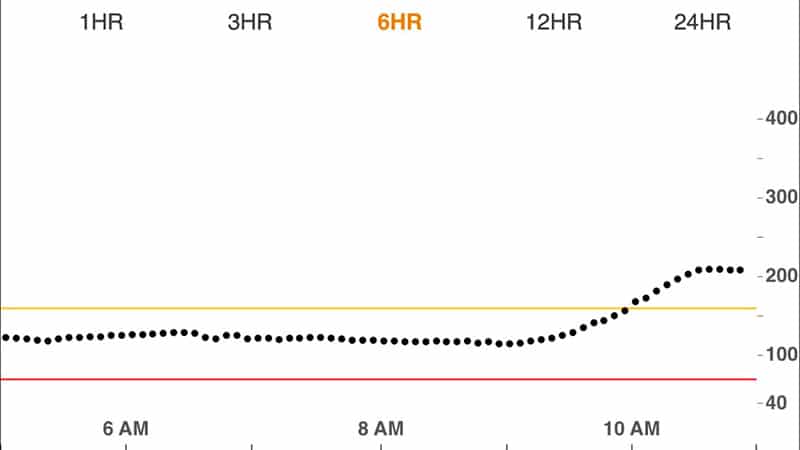
BAM! Blood glucose levels begin to rise similarly to an amusement park ride – it starts gradually and suddenly gets quicker and quicker. Those of you with CGM may see this.
How to prevent high morning blood sugar
Do not fret, friends. There are ways to deal. Here are three simple ways:
1) Take insulin right when you wake up
If it’s 2 pm and you notice your blood sugar is shooting up for no apparent reason, you’d take a correction dose of insulin to prevent that spike, right? (Well, I’d hope so).
The same concept applies here.
To determine how much insulin to take, wake up, record blood sugar values at 30 and 60-minute intervals, and record this for a few days (or use CGM data if you have it). Then, you can use your insulin-to-carb ratio to determine a correction bolus.
2) Increase your basal rate around your wake up time
If you fight Dawn Phenomenon, what’s a common strategy for success? Increasing basal rates in the wee hours of the morning to counteract that hormone-induced spike.
Well, if you’re used to a particular morning routine and know it’ll take you a little while to prepare food and eat, consider increasing that basal rate during that time period. That additional insulin may overcome the liver dumping glucose and blunt your blood sugar spike, or ideally, prevent it in the first place.
3) If you skip breakfast, stop skipping it and EAT SOMETHING
As a registered dietitian, I can regurgitate all the information from the Academy of Nutrition and Dietetics about why breakfast is important. This isn’t about that, but in all honesty here, try eating SOMETHING. I’d love if it were healthy, but if you’re just DYING to have Cinnamon Toast Crunch, by all means, have at it. If you’re about the low-carb life, go for some eggs.
This should, feasibly, prevent an even further increase in blood sugar had you not eaten anything at all and just went about your day.
Pop Quiz: What do these have in common?
If you answered insulin administration, you win!
Insulin, through more biochemistry magic, shuts off the liver glucose output, whether it comes from glycogen breakdown or gluconeogenesis. Thus, the spike should be halted in its tracks. YAY!
Bonus: Just add water!
Let’s pretend you decide to make some Gatorade from powder. It says to add 1 cup of water and mix thoroughly, so you do. You taste it, and it’s WAY too strong and concentrated. You add more water, mix, and now it’s delicious.
SAME THING WITH YOUR BODY.
You wake up in a state of dehydration because you haven’t consumed fluids in hours. Thus, the sugar in your circulation is more concentrated. Even if you wake up to a nice blood sugar, it’s quite possible the liver dump can have an even more accelerated effect because of this, so drinking a glass of water early (or even in bed) may help with this too.
(Also, most people don’t drink enough water each day, so it’s an easy way to sneak some more in)
These strategies should help you get your morning off to a better start, combat those pesky high morning blood sugars, and not allow diabetes to interfere with your plans!
For more actionable tips on preventing high morning blood sugars, watch this video of Diabetes Strong’s founder Christel Oerum explaining the 5 steps she takes to control her morning blood sugars.


GK
Has anybody here tried a small protein snack at 9-10 pm? Doing this will vary my glucose tests from 11 with no snack down to 3.5 with a handful of macadamias before bed. No insulin taken for the possible carbs. Yes Im type1 since 1984. Only been doing low carb for one year.
Christel Oerum
I often eat before bed. How my morning blood sugar ends up usually have more to do with how I set my basal and my carb amount
Prem
My fasting glucose level rising to 300mg/do and have no idea what to do about it….I’m Type 1 from 3 years now aged 22 years 4 months…eating no sugar content throughout the day…but why it is happening to me??? So high in the morning (uncontrollable)…please give me any suggestion ???…Thanks in advance
Christel Oerum
Hi Prem,
First, this is definitely a discussion you should start by having with your doctor. It sounds like you need to adjust your insulin. As described in the article it’s most likely a hormonal response (so nothing to do with what you eat), and you need to adjust your insulin accordingly. Try discussing the 3 options mentioned with your doctor and you should be able to work it out
Al
im having trouble telling the diff in what i have. i have good numbers all night. as soon as i get up within 20-30 mins i spike from 120 to 200 or so. seems to happen whether i eat at night or not.
Christel Oerum
That’s is very normal and probably means that you and your doctor needs to adjust your medication. It’s not your fault, it’s just your body’s natural mechanisms
Ricky Petty
For a couple weeks now I will get up with great numbers like this morning 104 get to work and before I get to eat I check my sugar its 300 it’s very annoying and dont understand it! Any help?
Christel Oerum
If it’s completely without eating or drinking (even black coffee or tea would be drinking), it could be Dawn Phenomena or feet on the ground. The post has some great tips as to how you can avoid the spike but essentially it all comes down to adjusting your meds. If you’re not on meds (and even if you are) it might be a good idea to discuss it with your doctor
Marni
Thanks for posting this! So glad to learn how to prevent my higher BGs 1-1.5 hours after getting up. Besides my long-term increased basals from 3am onwards due to DP, I’ll try more water and earlier basal.
Iben Hansen
Hi!
Tanks for good advise – I live in Denmark, and my daughter at 13 has had type 1 now for 5 years. Her bloodsugar has always been hard to control and she often goes fra low to high. And as a teenager its even harder……. Today she woke up high, got sick and had to stay in bed.
We strugle with no appetite in the morning…which makes everything more difficult. On top of that she doesnt like too much bread in her lunchpack- and often she eats too little in school and too much unhealthy stuff, when she gets home. Any good suggestions for breakfast and lunchpack?
The tired mother to a teenage girl❤
Christel Oerum
Hi Iben,
Managing diabetes, growing up and being a teenager is tough, I’m sure for both mother and daughter. And her changing hormones will undoubtedly also impact her blood sugars making management a constant moving target.
As for breakfast, from a diabetes perspective, if her basal is right she shouldn’t HAVE to eat. However, from an energy perspective, I think eating something before she’s off to school is probably optimal. Not only can she end up feeling sluggish she’ll also get very hungry which can lead to some severe afternoon munchies.
If your concern is overall caloric intake you could include more nutrient dense foods in her diet such as nuts, avocado, oil, nut butter and seeds. Most like to snack on that and it’s very blood sugar friendly.
If it’s about getting more carbs into her diet, maybe look outside bread. Wasa has some great flatbreads, pitas are good, rice or maybe fruit. Maybe having a small bag of strawberries or raspberries with and some nuts will make her more likely to eat that over a mars bar, or at least half the time.
And finally, if you haven’t already, ask her what she prefers. She might be craving sweet (can be solved with fruit) or fatty (nuts, etc.) or salty (salted nuts maybe).
She will of course never, and I’m my opinion shouldn’t stay away from less nutritious food so having a conversation on how to bolus for it is key. Knowing that fatty foods will hit your blood sugar over several hours, so maybe a double dose is needed, and that high glycemic food will hit faster so a significant pre-bolus is needed can make the world of difference.
Keep up being a rocking mom
Rebecca Peabody
Finally! This is the first article I have read that clearly distinguishes between DP and the feet on the floor rise in BS that I experience every day. Even my doctors have not given me this kind of clear advice, instead trying to adjust for DP instead of telling me about the crazy thing my liver clearly does each morning. One question I still have though is what type of food and how much is best? I’d like to eat something immediately upon (or even before) getting out of bed, but i don’t know what. I’ve been drinking a Premier Protein shake with 30g of protein and 5g of carb and that seems to work well initially, but within a hour or so my blood sugar has spiked. So I don’t think all foods are equally effective at combating this issue. Do you have any suggestions?
Ben
Hi Rebecca,
There is not necessarily one “correct” answer per se – it will be trial and error to determine what is best for you. I will say that the shake you described is spiking your blood sugar due to the protein content, which whey has a tendency to do, and that spike begins 45min-1h post-consumption. As the article mentioned, I would recommend something that will require some insulin – you likely could take some insulin up front for the protein shake and not experience the spike if you are enjoying those, or something with a small amount of carbs that will require a bolus should be adequate as well.
Jessie
As my family has a history of diabetes, I have been very careful about what I consume. These are very simple but effective tips. I find fruits as a very healthy snack. I have read this article today and found a list of some healthy fruits for diabetics: https://www.blenderfair.com/fruits-for-diabetics/ . Can I eat ripe mangoes if I am at risk of diabetes?
Laura
This is a seldom if ever addressed topic and I have been so frustrated. Thanks so much for putting out this much needed information…. Feet on the Floor BS high versus DP!
One question .. will just eating protein stop the rise or must I boils and eat carbs?
Team4kids
Brilliant. This post make many things clear in my mind.
Thanks
Christel Oerum
Excellent!